
SLEEP SCIENCE · 5 min
Motion Isolation for Couples
How independent pocket systems and surface stability reduce kinetic transfer.
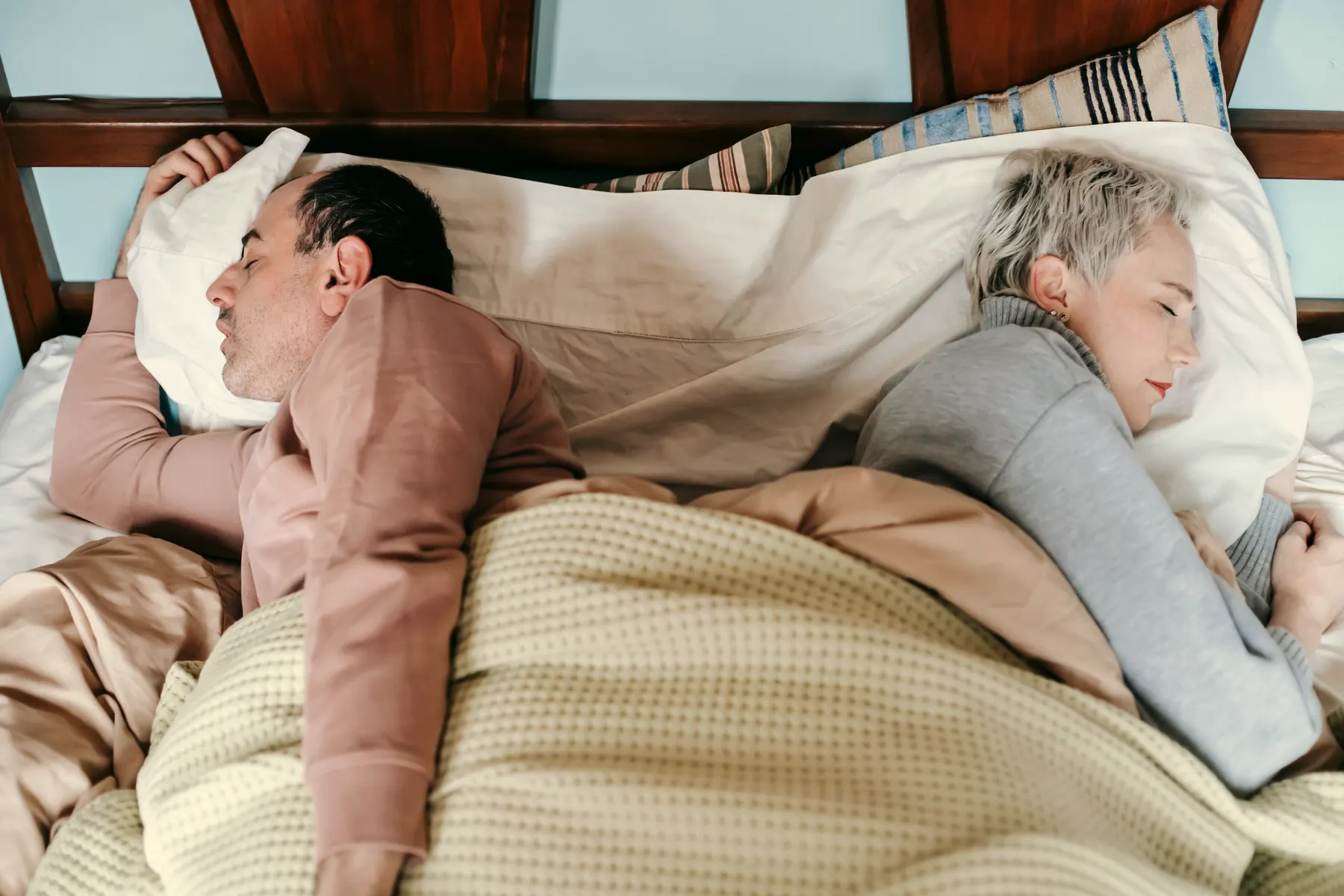
Sharing a bed has a cost: when one partner turns over or gets up, the other can feel it. But the research is reassuring. Most couples say they sleep better together, and the right mattress reduces that cost without asking you to sleep apart.
What the research says
In a study of 46 couples over eight nights, about a third of their movements happened within the same 30 seconds as their partner's, and people moved more when sharing a bed than when sleeping alone. Women reported being disturbed more often. Yet most couples still said they slept better together. A lab study of couples found about 10% more REM (dream) sleep, and less broken-up REM, when partners shared a bed.
How the springs are built decides how much motion travels
- Pocket springs: each spring sits in its own fabric sleeve, with no metal link to its neighbours, so a movement on one side stays mostly on that side.
- Open coil (Bonnell) springs: the springs are wired together, which can carry movement across the bed.
- Memory foam: absorbs movement, because it is slow to spring back.
- Thick comfort layers on top of the springs soak up movement before it reaches your partner.
Put together, memory foam and well-made pocket spring mattresses with thick comfort layers isolate movement best. Other hybrids come next, and open coil springs last.
The water-glass test proves little
Some stores stand a glass of water on a mattress and bounce beside it. It makes a good show, but it measures nothing about how two people sleep. A better test is to lie down together in your usual positions, then take turns rolling over and getting up. You can do exactly that at our experience centres.
Foam or pocket springs?
Memory foam is the quietest, but it sleeps warmer, and its edges sink more when you sit on them. Edges matter for couples, because each of you sleeps close to one. Pocket springs balance good motion isolation with better airflow, firmer edges and a surface that is easier to turn over on. The number of springs alone is a weak guide; overall build quality matters more.
For most couples, especially in a Lahore summer, a pocket spring mattress with a comfort layer on top is the sensible middle ground. Our Dreamer 1000 range, La Grande and Fresco O2 are all built on pocket springs.
Width matters as much as springs
All our mattresses are 78 inches (198 cm) long. For width, divide by two:
- 60 inches wide: 30 inches each, narrower than a single bed.
- 66 inches wide: 33 inches each.
- 72 inches wide: 36 inches each, about a single bed per person.
Most couples in Pakistan choose King size, 78 x 72 inches, which gives each partner about a single bed's width. If one of you is restless or a light sleeper, if there is a big size difference between you, or if a child often sleeps in your bed, choose the widest bed your room allows. Size names such as double, queen and king vary between brands, so always compare in inches. We make mattresses in every common width, and in custom sizes too.
When you want different firmness
Partners often need different support, especially when one is much heavier or sleeps in a different position. There are a few ways to handle it:
- Split comfort: left and right halves, each with its own firmness. You notice the join when you roll across the middle, and most couples get used to it within about a week.
- Two single mattresses side by side: each partner chooses their own.
- Two-sided mattress: a different firmness on each face. You sleep on one face at a time, so you choose together, and you can turn it over later.
- A shared compromise: medium-firm suits many couples. The heavier partner usually needs firmer support.
Our La Grande Pillow Top is two-sided: medium-firm on the top side and firmer on the bottom. You sleep on one side at a time, so choose together, and turn it over if you both want a firmer feel. Each of you can also take our Sleep Advisor separately and compare the results.
Other small fixes
- Use separate light quilts, so one partner's tossing does not pull the covers off the other.
- If your partner snores loudly, or seems to stop breathing, gasp or choke in their sleep, see a doctor. A new mattress will not fix that.
Sources
- GoodBed: how mattress coil types differ
- Tom's Guide and Sleepopolis: mattress testing for couples
- Pankhurst and Horne, Sleep, 1994: the influence of bed partners on movement during sleep
- Drews et al., Frontiers in Psychiatry, 2020: bed-sharing and REM sleep
- Troxel, Sleep Research Society: sleep and couples' relationships
- American Academy of Sleep Medicine survey, 2024, via Sleep Review
When to seek specialist care
Sleep comfort guidance is educational and does not diagnose or treat a health condition. Persistent, severe or radiating pain, numbness, breathing disruption or unexplained sleep problems should be discussed with a qualified healthcare professional.
TAKE THE SLEEP ASSESSMENT →