
BUYING GUIDE · 4 min
Firmness, Posture & BMI: A Better Way to Choose
Why body mass and sleep posture matter more than a universal firm-or-soft label.
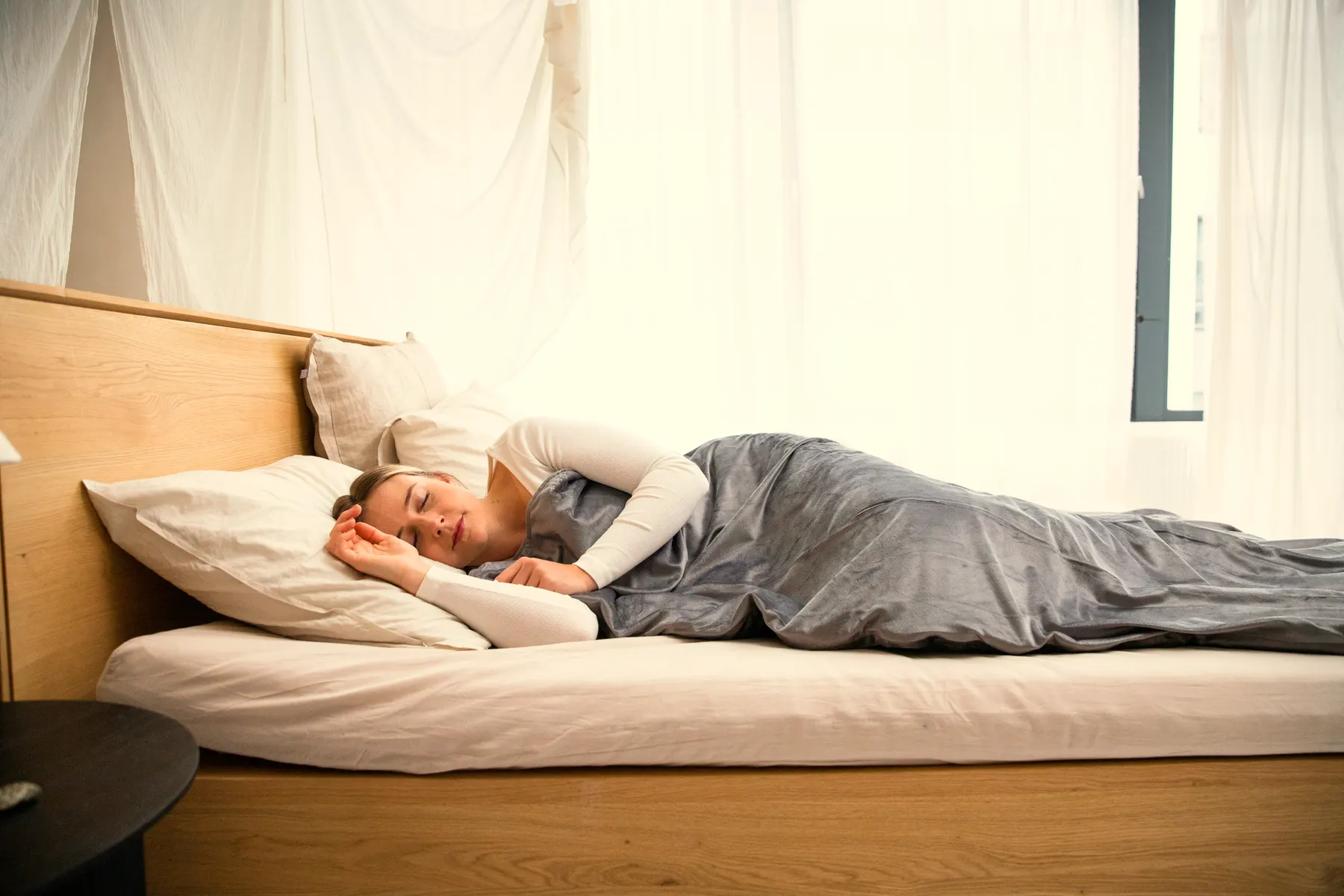
"Firm is good for your back" is one of the most repeated pieces of mattress advice, and one of the least helpful. The right firmness is personal. It depends mainly on how much you weigh and how you sleep, and your build fine-tunes it.
Start in the middle
Medium-firm is the firmness with the strongest research behind it, so it is the sensible place to begin. From there, adjust for your body.
Weight and position move it most
- Lighter sleepers do not sink far, so soft to medium mattresses usually feel best.
- Average weights usually suit medium to medium-firm.
- Heavier sleepers sink deeper and usually need medium-firm to firm support, with thicker comfort layers and a durable core such as pocket springs or high-density foam.
Then think about how you sleep.
- Side sleepers go softer, so the shoulder and hip can sink in.
- Stomach sleepers go firmer, so the hips do not sag.
- Back sleepers sit in between.
- Combination sleepers do best on a responsive surface that makes turning easy.
Height and hips
Height matters together with weight. In a small study of side sleepers, shorter people lined up best on softer mattresses and taller people on medium ones. That is why our Sleep Advisor uses your BMI, your weight measured against your height, rather than weight alone.
Hips matter too. In the same study, wider hips pulled the spine furthest out of line on soft mattresses. If your hips are noticeably wider than your waist, avoid a mattress that is soft all the way through, and look for zoned support, such as the 10 spring zones in La Grande Memory Euro Top.
Hip and shoulder pressure
Side sleepers with sore hips or shoulders need a supportive core with enough give at the surface. Too firm, and the bony point of the hip takes the load. Too soft, and the pelvis sags. A softer top layer, such as a pillow top or euro top, over a supportive core reduces pressure at the shoulders and hips.
Sleep on the side that is not sore, with a pillow between your knees so your top hip and knee stay level.
Your preferred feel still counts
Preference matters, within limits. If you love a firmer feel, you can go a step firmer than your body's starting point. But a heavier stomach sleeper who wants a soft feel is better served by a firm core with a plush top than by a soft mattress. Choose the comfort you like on top of the support your body needs.
Length and lifespan
Choose a mattress at least 15 cm longer than you are. All our mattresses are 78 inches (198 cm) long, which suits most adults up to about 183 cm (6 feet).
Heavier bodies wear a mattress sooner, so build quality matters as much as feel. Our Dreamer 1000 mattresses carry a 12-year warranty and all our other mattresses 15 years, and each one comes with a 3-day trial.
Let the Sleep Advisor do the maths
Our Sleep Advisor combines your sleep position, BMI, any aches and the feel you prefer into a firmness target, then suggests the two mattresses closest to it. Try them at one of our experience centres: lie on each for at least 15 minutes in the position you really sleep in.
Sources
- Sleep Foundation: how body weight affects mattress choice
- University of Central Lancashire and Silentnight: spinal alignment in side sleepers
- Royal Berkshire NHS Foundation Trust: hip pain (greater trochanteric pain syndrome) leaflet
- Kovacs et al., The Lancet, 2003: medium-firm versus firm mattresses
When to seek specialist care
Sleep comfort guidance is educational and does not diagnose or treat a health condition. Persistent, severe or radiating pain, numbness, breathing disruption or unexplained sleep problems should be discussed with a qualified healthcare professional.
TAKE THE SLEEP ASSESSMENT →